3.3 What Makes an Ecosystem Healthy? NC

A. What are Balanced Ecosystems?

B. Survival

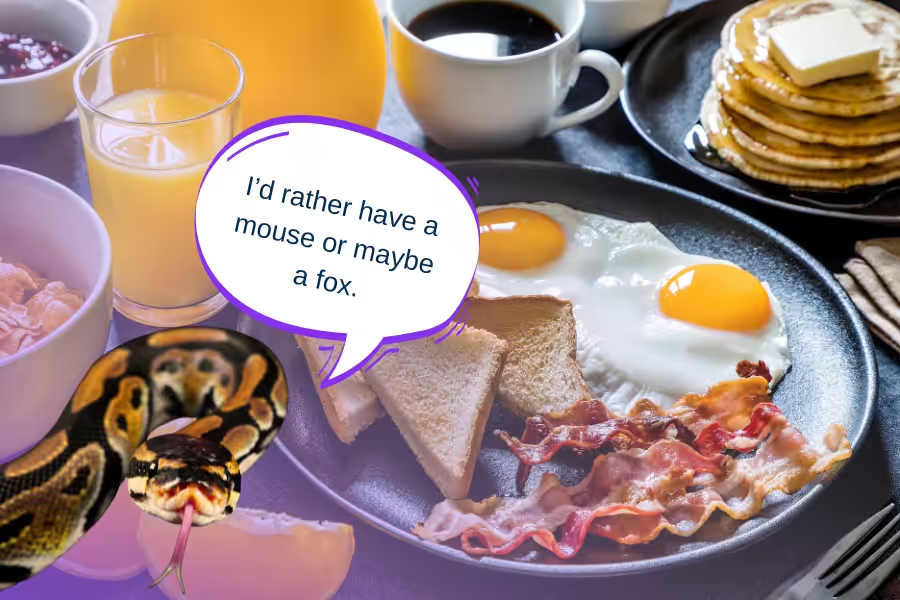
What did you have for breakfast today? Would you ever eat a raccoon or maybe a small bird? Pythons would.

No matter what you eat, do you ever notice how you probably feel better on days when you eat breakfast than on days when you don’t? That’s because all living things need energy to survive.

All living things get that energy from different sources. People get energy from eating plants or animals. Some living things get energy only from eating plants. Others get energy only from eating animals. Some living things, like plants, get energy from the sun, and some even get energy from eating other dead things. Pythons in the Everglades get energy from consuming or eating many kinds of birds and animals.


But food isn’t the only thing we need to survive.

Directions: 
Read the “Day in the Life” of a Burmese python in the Florida Everglades. See if you can spot the five things all living things need to survive. Make a list in your mission log, then check your answer.

Click hear to listen.

Check Your Understanding: 
Below are images of the four things pythons (and all species) need to survive. Check to see if you found all four when you read the paragraph. If you missed any, write them in your mission log. Each picture below shows one need. Click the image to see if you found all four correctly. 

Need 1

Stop The Invasion_ 3.3 Water

Need 2

Stop The Invasion_ 3.3 Shelter

Need 3

Stop The Invasion 3.3 Food Large

Need 4

Stop The Invasion_ 3.3 Air

C. Python’s Natural Home

Different ecosystems provide different types of food, shelter, water, and access to air. Some ecosystems are great homes for some plants and animals and terrible homes for others. 


Different parts of the world also have different climates and temperatures. Some species can only live where it’s hot, others can only live where it’s cold. Others can live both where it’s warmer and cooler.


Directions: Let’s learn more about the original or native home of the Burmese Python so we can see what type of habitat they need to survive. 

Where is their natural home?

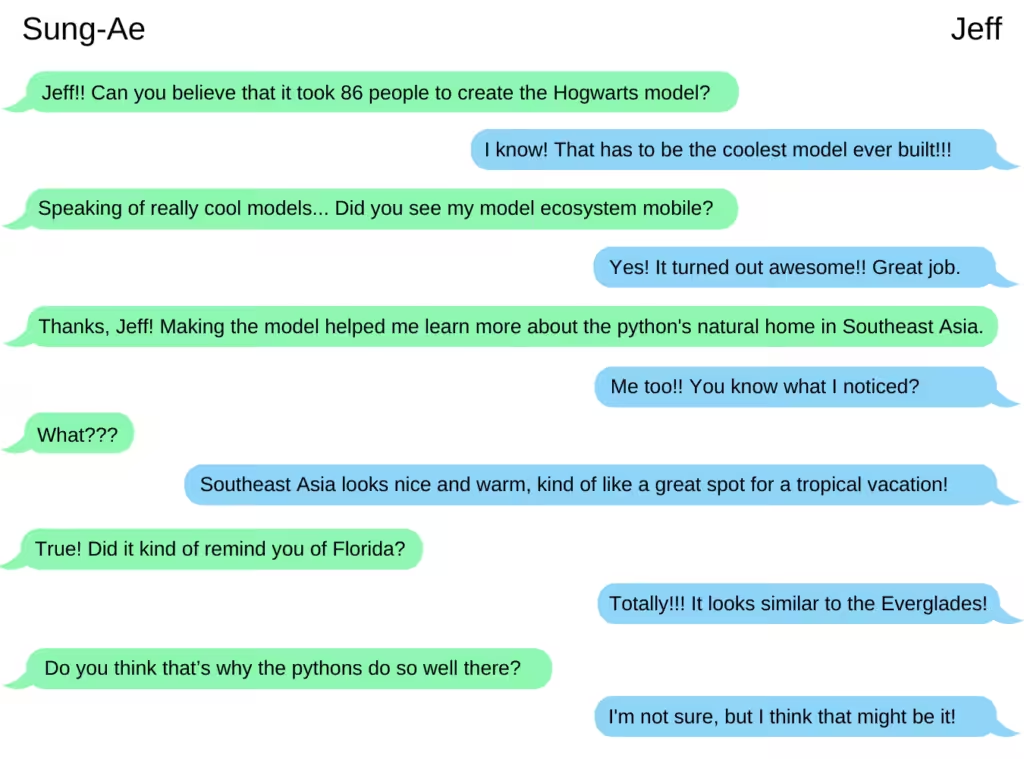
The python’s natural home is Southeast Asia. Find out which countries pythons live in. 

What is their natural home like?

Watch this video and act like a scientist. Observe the home ecosystem of the Burmese Python. As you watch, think about: 

  • What do you observe about the climate?
  • What types of shelter and water do you see? 
  • How many different plants and animals do you see? What are possible sources of food or energy from each python?

D. Compare and Contrast

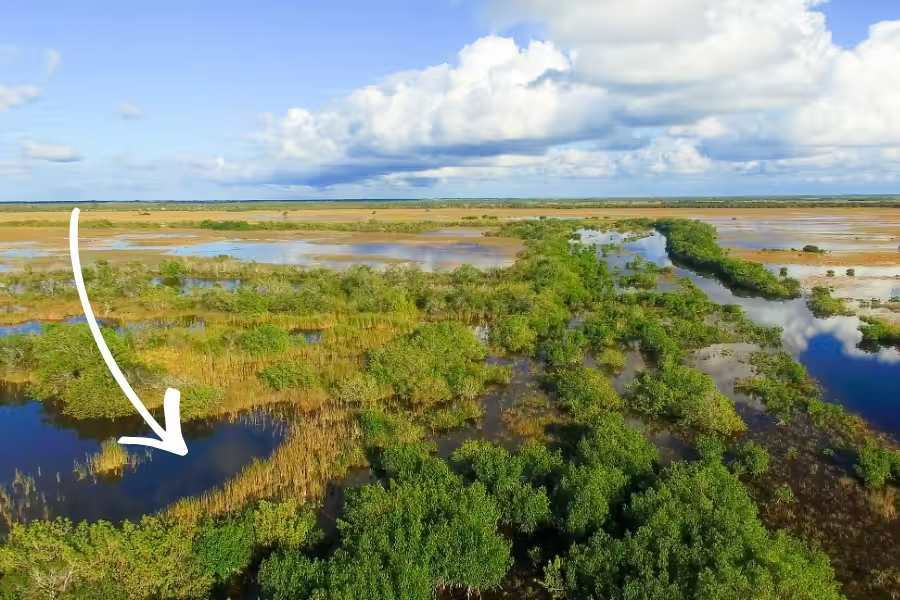
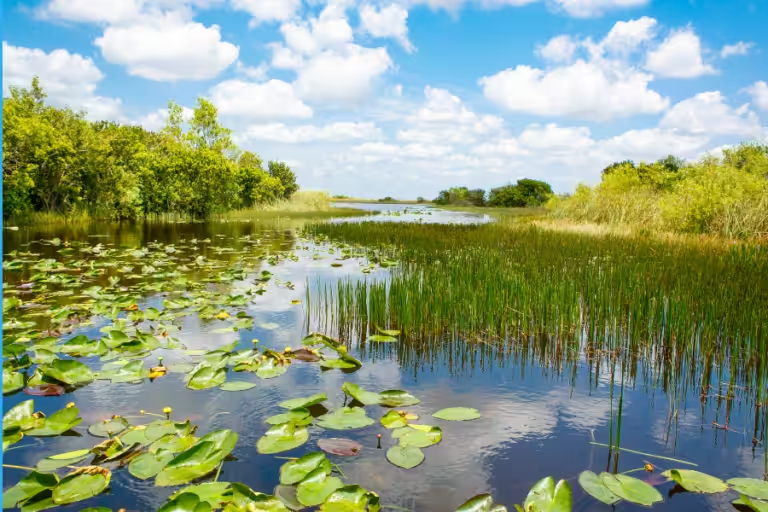
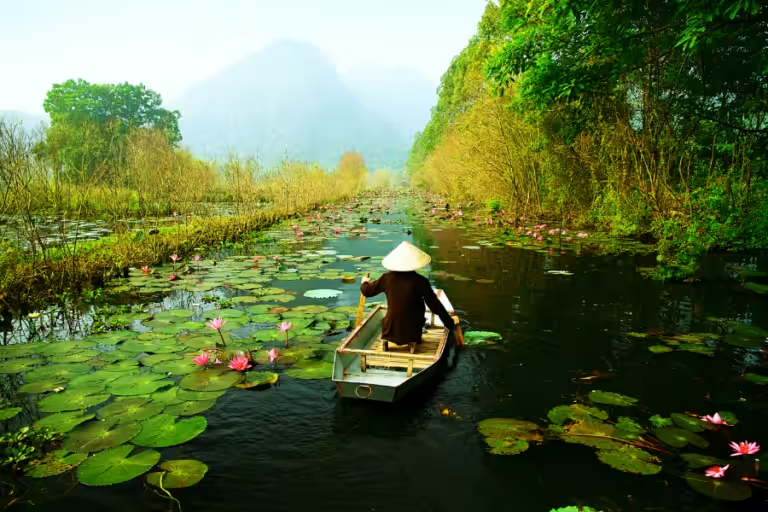
Species can only live in places that meet their needs. The Burmese pythons couldn’t survive in snow and ice, for example. Below are two images. One is the Florida Everglades, the other is Vietnam in Asia. Vietnam is one part of the world where Burmese Pythons live naturally. Look at the two images – Python’s old and new homes. Study the pictures, then complete the directions in your Mission Log. 

Florida Everglades

Hanoi, Vietnam

Compare and Contrast Two Ecosystems
You have had a chance to explore the Florida Everglades as well as Southeast Asia, the natural home to the Burmese python. Use the graphic organizer in your Mission Log to answer the following:

  • What do you notice about what is similar between the two environments?
  • What are the biggest differences?
  • Make a Prediction: Given everything you know about both ecosystems, what do you think the impact of the Burmese pythons being in the Everglades has been?

B. Invading New Lands

Imagine the Florida Everglades suddenly got too cold and Python’s needed to find a new home. Where in the world could they go? Take the “New Home” challenge to figure out which ecosystem would be best for the pythons and why.


Directions: Read about each new home below and decide which would be the best new home for pythons:

Directions: Before you learn about food webs, let’s make a simple food chain. Below are five living organisms from the Everglades: a frog, an alligator, a mosquito, an orchid, and a raccoon. Drag and drop each organism to figure out who eats whom. The arrow should be pointing away from the animal that is getting eaten, and toward the animal that is doing the eating. It’s like a puzzle!

B. Let's Make a Food Chain

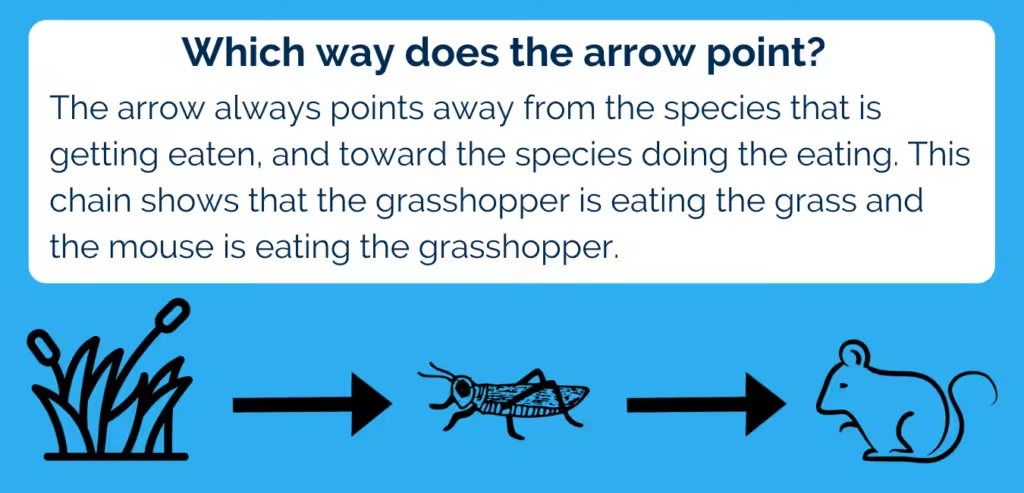
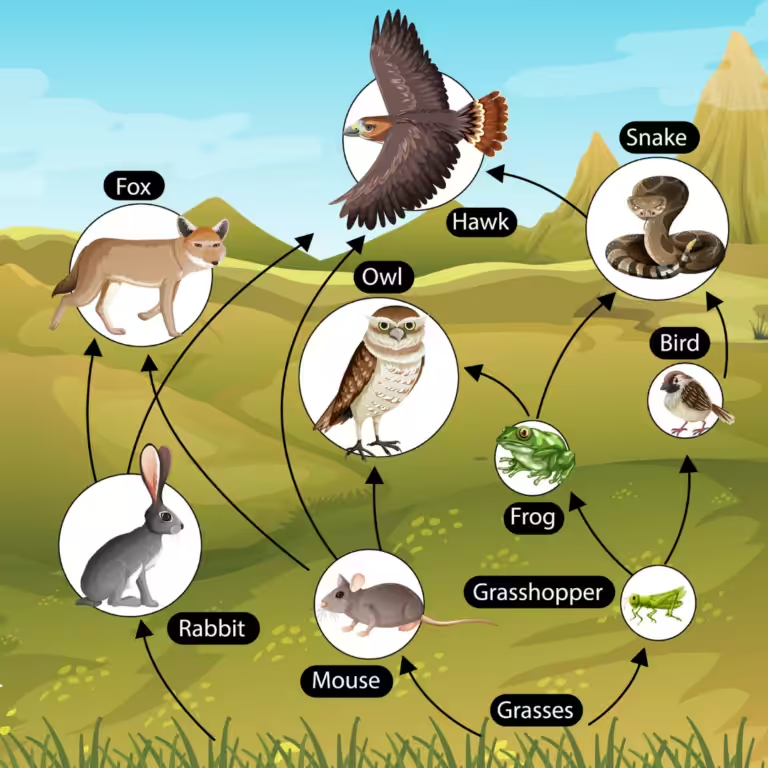
When one organism eats another, it gets energy. Scientists use diagrams with arrows to show how energy goes from one organism to another. There are two kinds of diagrams:


  • Food Chain: A simple diagram that shows one single path of who eats whom.
  • Food Webs: A diagram that shows all of the food chains in an ecosystem.

These diagrams are like nature’s menus. They show which animals eat other animals.

Directions: Before you learn about food webs, let’s make a simple food chain. Below are five living organisms from the Everglades: a frog, an alligator, a mosquito, an orchid, and a raccoon. Drag and drop each organism to figure out who eats whom. The arrow should be pointing away from the animal that is getting eaten, and toward the animal that is doing the eating. It’s like a puzzle!

C. Read

What makes an ecosystem healthy?

Fact Finder: Now we’ll read more about how all of the organisms in an ecosystem work together to keep the ecosystem healthy. As you read, write down any important information in the “Fact Finder” section of your Mission Log.

D. What If?

What would happen?


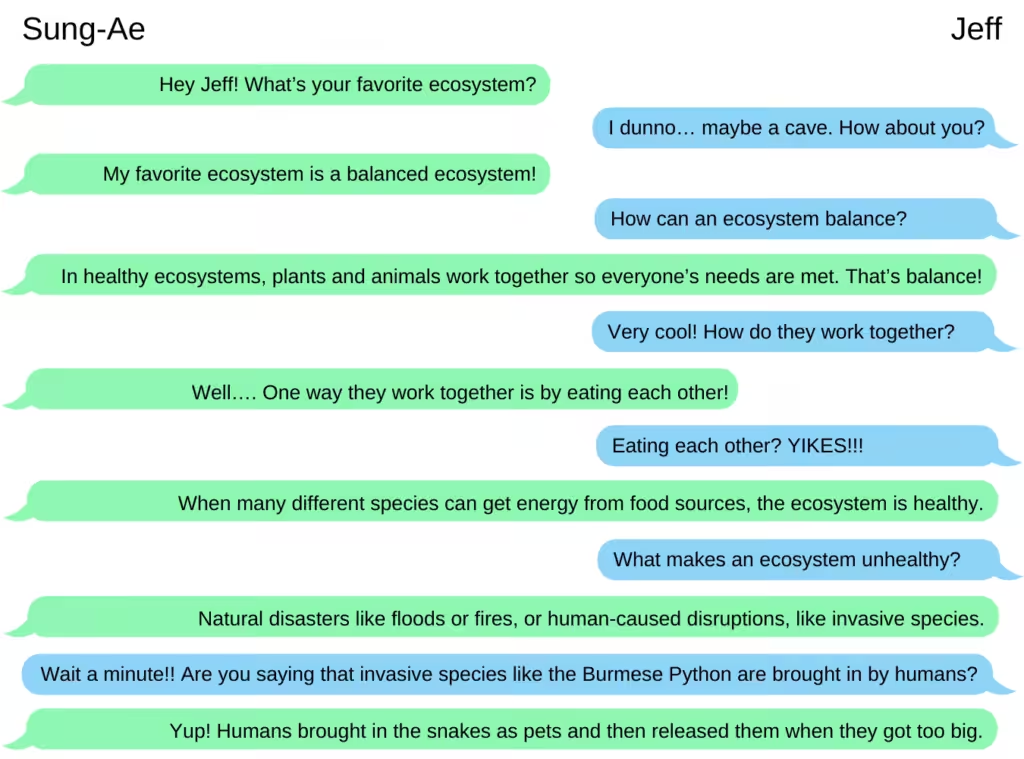
Invasive species can ruin the balance in an ecosystem. They might eat another species. Or, they might compete for food. Let’s use our imagination and think about what would happen if something in the ecosystem changed….


Take a look at this food web. Select one organism from the food web. Then, with a partner or in your Mission Log, answer the following:

  • What would happen if an invasive species killed off one animal in the food web?
  • How many other species would be affected? Try to think of as many effects as possible!